

Opinion Piece
From fragmentation to coherence: building African HE data architecture
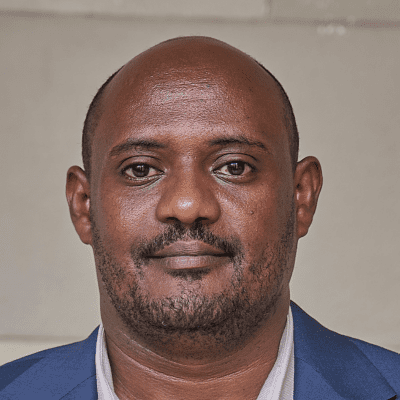
Kibrome M. Haile
Project Manager for Africa at Obreal
The creation of an integrated African Higher Education (HE) Space relies on having reliable, comparable, and relevant data across various systems. In this context, HAQAA3’s HE Data for Policy work aims to strengthen the regional foundations needed for a clear continental data framework, led by the African Union. Throughout Africa, HE reform increasingly focuses on harmonization, mobility, quality assurance, and regional integration. Continental frameworks like Agenda 2063 and the Continental Education Strategy for Africa (CESA16-25 in the recent past and CESA 26-35 now) present an ambitious vision. However, one ongoing challenge remains: our ability to measure progress consistently across different countries and regions.
The problem is not lack of data. It is fragmentation.
Work done during HAQAA2, especially the continental mapping of HE data systems, revealed a landscape marked by uneven capacity, disharmonized indicators, limited interoperability, and heavy reliance on manual processes in many parts of the continent. Data often exists, but it is siloed. It is nationally contained, regionally inconsistent and rarely aligns with continental frameworks. This fragmentation has implication for policy. Without a common set of indicators, efforts to harmonize risk becoming just ambitious goals rather than measurable outcomes. The challenge is structural, it involves governance, coordination and capacity, not just software or reporting templates.
HAQAA3 tackles this challenge intentionally from the regions upward. Many of Africa’s Regional Economic communities (RECs) and University Associations have already their own regional data initiatives, albeit at different paces. Instead of creating separate systems, HAQAA3 builds on these existing structures. The establishment of Regional Policy Data Units (PDUs) follows this philosophy: to gradually build capacity at the continental level with support from the African Union Commission (AUC), working closely with the Pan African Institute for Education for Development (IPED). In this sense, HAQAA3 is not just supporting regional data systems; it is helping to create a unified African HE information ecosystem. This approach avoids imposing uniformity while allowing for comparison. It recognizes diversity across regions while fostering convergence where it matters most: is shared indicators, definitions and reporting standards.
A significant step in this process has been the revitalization of the African HE Data Team (AHEDT). This team brings together experts from regional and continental university associations, professional bodies, the AUC, and international partners. One of its main contributions has been developing a basic set of African HE Indicators. These indicators are not meant to copy external benchmarking frameworks. Instead, they will fill a long-standing gap: the lack of a structured continental discussion on HE data that reflects African priorities, including intra-Africa mobility, institutional diversity, regional quality assurance dynamics, and inclusion challenges specific to the continent. In this sense, the work is evolutionary than disruptive. It helps Africa express its own metrics while remaining connected to global data systems.
Capacity is a critical lever. Technical architecture is not enough without skilled manpower. HAQAA3’s training programs focus on officials in Ministries, quality assurance agencies, and higher education institutions (HEIs) who handle HEMIS and data reporting. The goal is to foster a culture of data governance, shifting from reactive reporting to proactive policy analysis. Long-term continental integration will rely on these ‘data stewards’ across regions who know not just to collect data but also interpret, validate and use if for strategic decision making.
Looking ahead, success will not be measured by the creation of a single continental database, I will be measured by how much stronger regional systems are, how well the indicators work together, and how evidence shapes policy debates. Reliable, African-led data is not a technical luxury. It is essential for real harmonization. Without it, integration stays on surface level. With it, regional initiatives can connect, continental monitoring can improve, and the African HE Space can grow based on shared evidence. The journey from fragmentation to coherence takes time. However, through its multi-level approach, HAQAA3 is helping build the foundation for data system in African HE that is both independent and collaborative.