
Opinion Piece
From vision to infrastructure: why hosting the PAQAA interim technical unit positions Africa for a quality revolution

Olusola Oyewole
Secretary General of the Association of African Universities
Africa’s higher education sector is expanding at an unprecedented pace. However, beyond increasing access, the real challenge lies in ensuring quality, comparability, and global relevance. The establishment of the Pan-African Quality Assurance and Accreditation Agency (PAQAA) Interim Technical Unit represents a decisive shift from aspiration to implementation.
By hosting this Interim Technical Unit, the Association of African Universities (AAU) is doing more than providing institutional support; it is anchoring a continental mechanism capable of transforming how quality assurance is coordinated, delivered, and sustained across Africa.
AAU as a continental anchor
AAU’s role as host places it at the center of Africa’s higher education quality ecosystem. This is both strategic and symbolic. It reinforces AAU’s longstanding mandate while positioning it as a hub for coordination, standard-setting, and capacity development.
Hosting the Interim Technical Unit ensures continuity and legitimacy for PAQAA and enables inclusive participation across Africa’s diverse systems. More importantly, it bridges the long-standing gap between policy frameworks and implementation, translating continental commitments into practical outcomes.
In this sense, AAU is evolving from a convening platform into an engine of systemic transformation, one capable of shaping how quality is defined and assured across the continent.
From frameworks to function
The PAQAA Interim Technical Unit serves as the operational backbone of the alliance, translating high-level ambitions into coordinated, day-to-day actions.
Progress to date demonstrates this shift:
- A multinational team is actively coordinating implementation across countries
- Strategic collaborations with regional bodies such as CAMES and IUCEA are underway
- Capacity-building initiatives have trained experts and strengthened national agencies
- A continental database of quality assurance experts, including students, has been established
These developments signal a clear transition from dialogue to delivery.
At its core, the Interim Technical Unit performs three essential functions:
- Coordination: aligning national and regional quality assurance systems
- Capacity Development: strengthening institutions, agencies, and peer reviewers
- Implementation Support: facilitating reviews, benchmarking, and harmonization
This work is already producing tangible results. Site visits to quality assurance agencies in countries such as Lesotho and Namibia have demonstrated the value of a coordinated continental approach, with more to be visited before the end of the project.
“This process has demonstrated that African-led quality assurance is not only possible but credible and rigorous. The ASGQA is a powerful instrument for Higher Education Institutions and external Quality Assurance Agencies” (Dr. Anneley Willemse, External Review Panel Chair, Lesotho site visit).
“One of the key outcomes of the HAQAA initiative is the development of the ASG-QA standards, which are important because they provide a benchmark across the country and respect the diversity of each of the national systems, so HEIs have the benchmark to apply and a system that will help their framework be developed” (Dr. Eunice Marete, Expert, Chairperson)
Trained experts: a growing continental talent pool
To date, 80 quality assurance experts from over 32 nationalities have been trained, forming a diverse and inclusive community of practice. This includes:
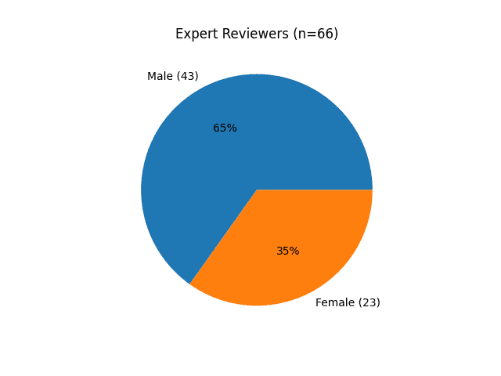
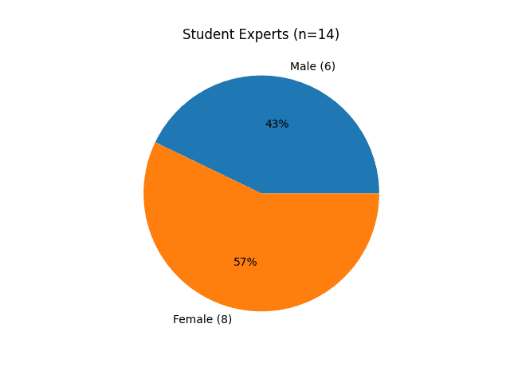
The inclusion of student experts reflects a forward-looking approach, ensuring that stakeholder perspectives are embedded within quality assurance processes.
Importantly, these experts are distributed across the continent, ensuring that expertise is not centralized but accessible across regions. Training has combined asynchronous learning, targeted online sessions, and continuous engagement, preparing participants for agency reviews, institutional assessments, and benchmarking exercises.
Strengthened national agencies
Beyond individual capacity, the initiative is reinforcing national quality assurance bodies. Through training, peer learning, and participation in continental reviews, agencies are becoming more robust, coordinated, and aligned with shared standards.
This dual focus on people and institutions ensures that PAQAA’s impact is both immediate and sustainable.
Securing the future of PAQAA
For PAQAA, the Interim Technical Unit represents a structural breakthrough. Too often, continental initiatives remain aspirational due to weak implementation mechanisms. This Unit changes that dynamic.
It enables PAQAA to become:
- Scalable: extending its reach across all regions
- Sustainable: moving beyond project-based interventions
- Credible: delivering measurable and verifiable outcomes
Through its work, PAQAA is evolving into a functional system capable of supporting harmonization while respecting national contexts.
Implications for Africa
The broader implications are profound. A harmonized quality assurance system is not merely a technical goal; it is foundational to Africa’s development agenda.
Perhaps most importantly, it addresses the persistent fragmentation of Africa’s higher education systems. Stakeholders increasingly recognize the consistency of standards and the sense of belonging to a truly continental system rather than isolated national frameworks. The experience from the Lesotho and Namibia reviews further reinforces this point:
“For the first time, we feel part of a truly continental quality assurance system, not just a national one.” — (Dr. Moeketsi Letele – Chief Executive, CHE, Lesotho).
From Milestone to Momentum
As highlighted during the launch of the PAQAA Interim Council, this moment is not a beginning but a milestone. Foundations have been laid, systems are operational, partnerships are active, and capacity is growing.
The priority now is to sustain momentum by: deepening regional and institutional collaboration, expanding expert training and participation, institutionalizing review and benchmarking mechanisms and securing long-term political and financial support. The credibility of PAQAA will depend not only on its design but on its ability to deliver consistently over time.
Conclusion
Hosting the PAQAA Interim Technical Unit is both an achievement and a responsibility. For AAU, it marks a defining evolution in its continental role. For PAQAA, it provides the structure needed to deliver on its mandate. For Africa, it represents a critical step toward owning and shaping the future of its higher education systems.
Early successes, including collaborative reviews in countries such as Lesotho, Namibia, Guinea, and Egypt, demonstrate what is possible when African institutions work together toward shared standards.
If sustained, this initiative could become one of the most consequential reforms in African higher education, transforming not only how quality is assured, but how African knowledge systems are recognized and valued globally.