
HAQAA3 contributes to data-driven governance debates at the 2025 ADEA Triennale
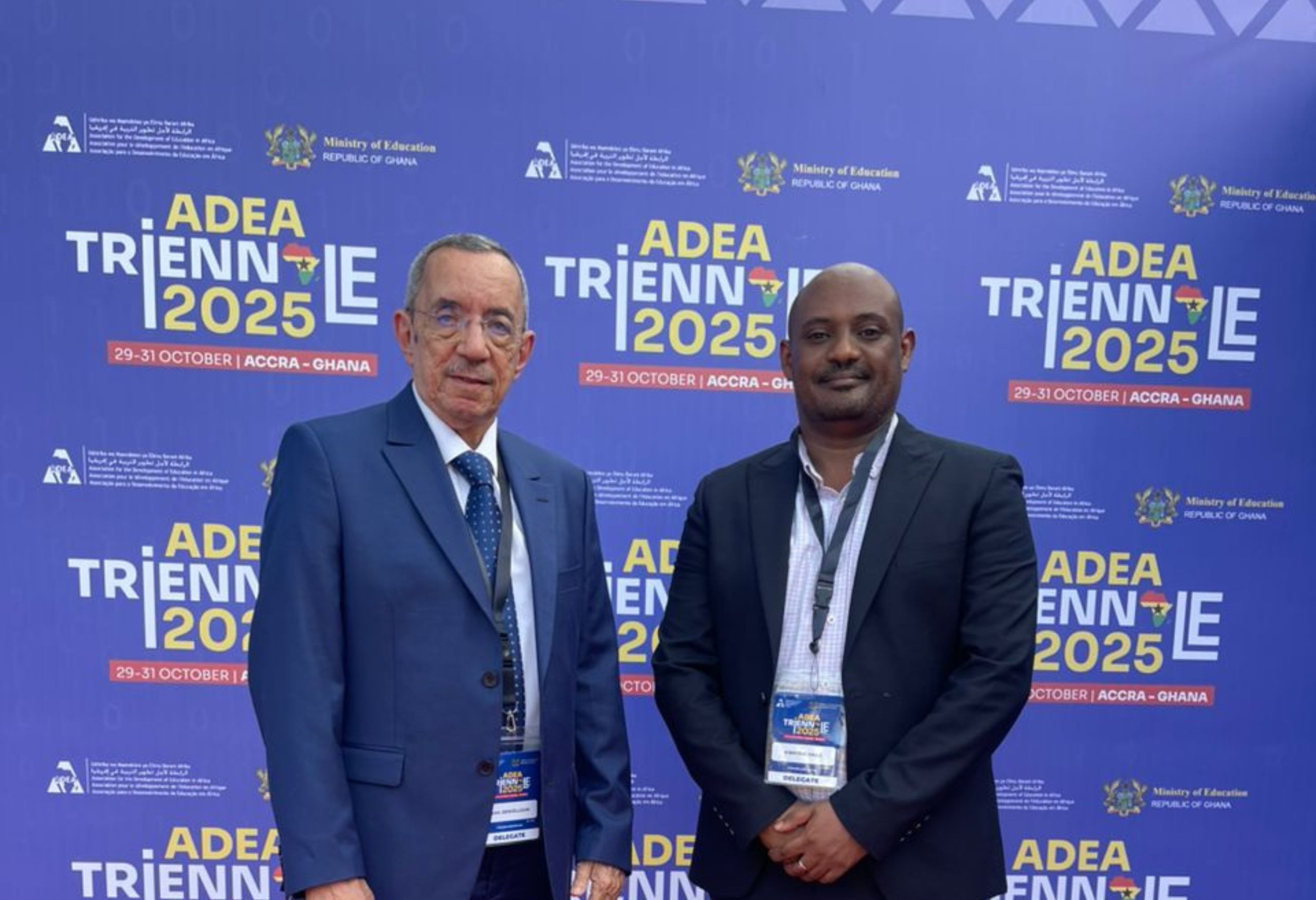
The HAQAA3 Initiative took part in the data-focused deliberations of the 2025 ADEA Triennale, held in Accra, Ghana, contributing to the theme “Repositioning Higher Education and Scientific Research through Sustainable Financing, Research Relevance and Skills Mobility Aligned with the AfCFTA.”
HAQAA3 participated in the high-level panel “Data-Driven Transformation: Evidence-Based Governance and Digital Innovation,” dedicated to reshaping Africa’s data ecosystems for higher education, research and innovation.
Representing HAQAA3’s Higher Education Data for Policy Work Area, Kibrome Haile and Prof. Wail Benjelloun joined experts from ministries, research institutions and continental initiatives to discuss how Africa can build a more coherent, reliable and interconnected data environment.
Data at the core of governance and transformation
The panel underlined the urgency of placing data at the centre of governance, policy formulation, and monitoring and evaluation. While recognising the opportunities created by digital transformation, discussions highlighted persistent structural challenges across African data systems, including weak interoperability, inconsistent metadata standards and limited analytical capacity.
Speakers stressed that robust data systems are essential not only for institutional performance, but also for national development, labour-market alignment, financing and international comparability. Fragmented and unreliable data, they noted, undermines the credibility of African statistics at the global level, reflecting gaps that often originate within national systems.
HAQAA3’s contribution to continental data harmonisation
In his intervention, Kibrome Haile from Obreal presented HAQAA3’s vision for an integrated African higher education data space grounded in harmonisation, interoperability and capacity development. He highlighted three strategic contributions of the initiative:
- Addressing fragmentation and lack of comparability, through the harmonisation of core indicators, strengthened metadata governance, and support to Member States in aligning HEMIS and quality assurance data processes with continental frameworks such as CESA and Agenda 2063.
- Establishing Regional Policy-Data Units (PDUs), co-created with the AAU, Regional Economic Communities, Regional Universities Associations and continental bodies, to serve as hubs for analysis, data curation, technical guidance and policy intelligence.
- Rolling out a regional training programme, based on a 12-week cohort model, targeting national HEMIS officers, QA agency staff, planners and institutional data managers, with the aim of professionalising data management and analytical skills across Africa
The session generated strong engagement from ministers, statisticians, quality assurance agencies, researchers and representatives of continental organisations. Through its participation, HAQAA3 reinforced its role as a leading continental initiative for evidence-based governance and data capacity-building, contributing to Africa’s education and development objectives.