Opinion Piece
African degrees: Between the Promise of Mobility and Real obstacles: Focus on the DRC
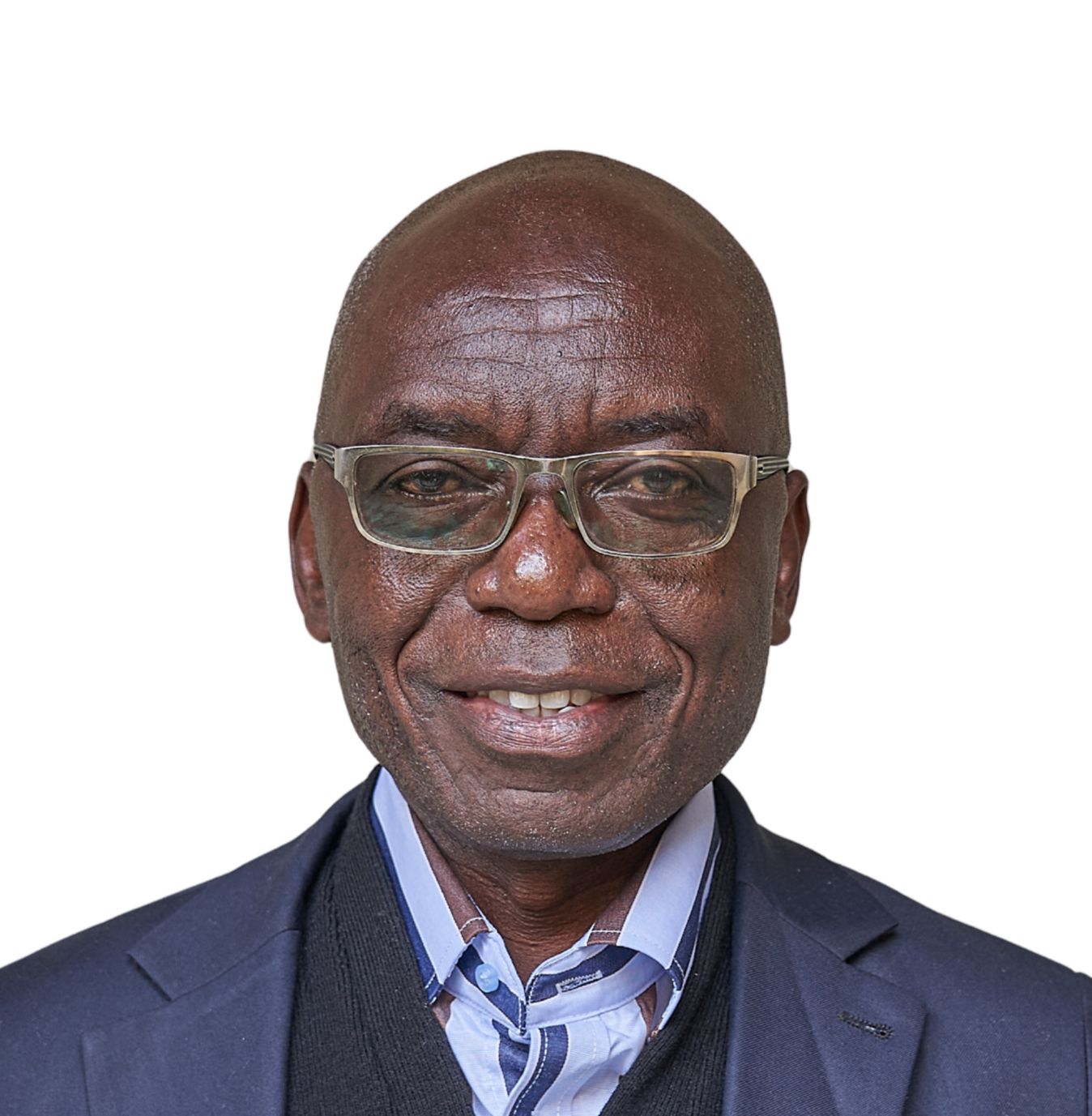
Georges Mulumbwa Mutambwa
Director of the Internal Quality Assurance Unit – University of Lubumbashi (UNILU)
Studying in an African country and being promised a job anywhere else on the continent remains the aspiration of most Africans. But this ambition quickly fades when it encounters the complex realities on the ground, where the performance and disparities of national education systems are perceived differently. What is the reality in everyday practice?
To shed light on this issue, the case of the Democratic Republic of Congo (DRC) is quite emblematic. Its strategic geographic location, as well as its integration into several geopolitical blocs, makes it a textbook case whose lessons could be applied to other African contexts, particularly for education systems seeking recognition as doubly effective, at both the national and continental levels. Naturally, an internationally recognized degree significantly expands the job market far beyond the local talent pool.
The DRC’s central location in Africa places it at the crossroads of three worlds. Lusophone, Anglophone, and Francophone spaces converge there. This position de facto integrates the country into several sub-regional dynamics. The country is a member of the Southern African Development Community (SADC), the East African Community (EAC), the Economic Community of Central African States (ECCAS), and the Economic Community of the Great Lakes Countries (GCLC). This unique geographical context thus places the country at the intersection of Southern, Eastern, and Central Africa and significantly fosters the intensification of economic, political, and human flows. However, it also highlights important structural challenges, including the issue of harmonizing educational systems within these dynamics.
Consequently, the State’s stance is called into question. Should Congolese higher education, for reasons of sovereignty, develop independently, in a sui generis manner, within the sub-regions to which the country belongs, or should it align itself with the educational models of its neighbors? And this, in a context where there is no single framework, but rather a plurality of structures and practices.
One might also wonder whether, in the absence of a common foundation in the architecture of curricula, the DRC would be able to cooperate effectively with the countries of the sub-region, particularly in terms of professional mobility and scientific collaboration.
Behind this institutional debate lies a very concrete reality for the average citizen seeking opportunities: the student, the researcher, or simply the job seeker. In the nine countries bordering the DRC and their sub-regions (Zambia, Angola, Republic of Congo, Central African Republic, South Sudan, Uganda, Rwanda, Tanzania, and Burundi), one question keeps recurring: are their qualifications recognized beyond national borders? The issue of diploma equivalency resurfaces and emerges as a potential barrier to professional mobility. Students pursuing their studies abroad often have to contend with additional, sometimes burdensome, requirements imposed by host institutions. Thus, academic mobility within the African continent remains paradoxically hampered by national diploma recognition systems that are still highly compartmentalized. For example, a holder of a Bachelor’s degree (Bac+3) from a Congolese university who wishes to pursue a Master’s degree in South Africa (located just a two-and-a-half-hour flight away) is, in most cases, required to complete a preliminary year of Honours studies. This requirement, which is in addition to others such as proficiency in English, reflects the lack of a harmonized framework for the transparency of academic pathways. Similarly, in the DRC, the Minister’s signature on the diploma is sufficient to validate it, whereas in Senegal, for example, it also requires validation (accreditation) by the National Agency for Quality Assurance, ANAQ – Sup, while both of these countries belong to the CAMES area.
This fragmentation in the procedures and structures of educational pathways across the continent is detrimental to students, but not only them. It equally affects teaching and research staff, whose mobility remains hampered by constraints of all kinds. In the DRC, for example, any higher education degree obtained abroad requires mandatory accreditation by the Ministry of Higher Education. In the absence of automatic recognition mechanisms, this requirement acts as an institutional filter that considerably slows the circulation of skills. Moreover, the terminological and statutory differences between the Congolese university system and those of its partners contribute to maintaining structural confusion. The titles of “assistant ” or “professor,” as defined in the CAMES system, do not cover exactly the same functions or the same levels of qualification as in the DRC, despite the latter being a member. The situation is no different in the majority of SADC countries. In the DRC, the rank of assistant is frequently associated with the status of doctoral student involved in teaching supervision. But, in the CAMES system, this status is normatively reserved for a PhD holder.
Furthermore, prior to the introduction of the LMD system, the DRC awarded the Diplôme d’Études Supérieures (DES). This theoretically granted access to doctoral studies. However, in other university systems, notably in Belgium (the former colonial power which still maintains strong partnerships with Congolese universities), only the Diplôme d’Études Approfondies (DEA) allowed enrollment in a doctoral program, as the Belgian DES (Diplôme d’Études Spécialisées) was more geared towards professional training.
This divergence in nomenclature and purpose recently created significant difficulties for Congolese graduates wishing to pursue doctoral studies abroad. To resolve this ambiguity, Congolese academic authorities eventually adopted the terminology “DES/DEA” in their official handbook. This aimed to indicate that the Congolese DES (Diploma of Higher Studies) corresponded, in its spirit and objectives, to the DEA (Diploma of Advanced Studies) in other countries. However, this clarification was insufficient to harmonize practices. Indeed, with equivalent diplomas, various scenarios were available to Congolese candidates. In rare cases, they were admitted to a doctoral program without additional requirements, but quite often they were denied access due to system incompatibility. These host institutions considered that the Congolese DES did not fully correspond to their own DEA.
Similarly, the structure of academic careers varies considerably. In the DRC, the title of ” professor ” does not constitute the pinnacle of the academic hierarchy before emeritus status, as it is preceded by the rank of professeur ordinaire. Conversely, in countries like South Africa, the rank of (Full) Professor represents the culmination of an academic career, as does the rank of professeur titulaire within the CAMES region. Emeritus status there is considered more of an honorary title, unlike in the DRC where it is a rank sanctioned by ministerial decree with salary implications.
These discrepancies, far from being mere differences in nomenclature, reflect a lack of harmonization of academic frameworks at the regional level. This raises the crucial question of the Congolese education system’s compatibility with regional and international standards. Which standards should the DRC adopt to train locally while achieving regional success? Those of SADC, EAC, CAMES, or the African Union? While divergences exist, experts nevertheless highlight significant convergences between these frameworks. In this context, some continental initiatives are attempting to propose comprehensive frameworks. This is the case with HAQAA (Harmonization, Quality Assurance, and Accreditation), which aims to harmonize quality criteria and evaluation mechanisms across the continent. Nevertheless, despite these advances, much remains to be done. For beyond the texts and institutional frameworks, the true urgency of this harmonization is felt in the daily lives of students, teachers, and job seekers.