

Four regional IQA trainings and Leadership Forums: HAQAA3 enhances capacity across Africa
In the last two years, the HAQAA3 Initiative successfully implemented four online training courses on Internal Quality Assurance (IQA), complemented by four Leadership Forums for university executives. Together, these activities strengthened IQA systems at institutional level and supported continental integration in higher education.
The four IQA trainings – held in September and November 2024 and April and June 2026 – reached 144 HEI professionals (56 female, 88 male) from 49 African countries. Implemented with and trough regional partners IUCEA, NAQAAE, CAMES, AUF, ANAQ-Sup, SARUA and CNAQ, the trainings were tailored to sub-regions: East Africa and anglophone North Africa; West Africa and francophone North Africa; Central Africa and the Indian Ocean; Southern Africa and lusophone countries.
Each course followed a common modular structure:
- Pre-module on continental and regional integration in African higher education
- Module 1 on policy frameworks (ASG-QA, UNESCO Global and Addis Conventions, regional QA frameworks)
- Module 2 on IQA in HEIs (stakeholder management, curriculum development, internal programme evaluation, interaction with external QA)
- Module 3 on QA of doctoral education and research
- Module 4 on digital transformation, including QA of online learning and artificial intelligence.
The trainings also served as an important platform for sharing best practices, both among institutions within each region and through contributions from universities in Europe.
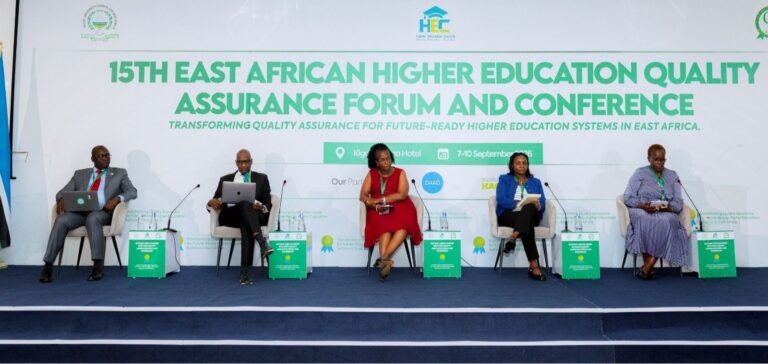
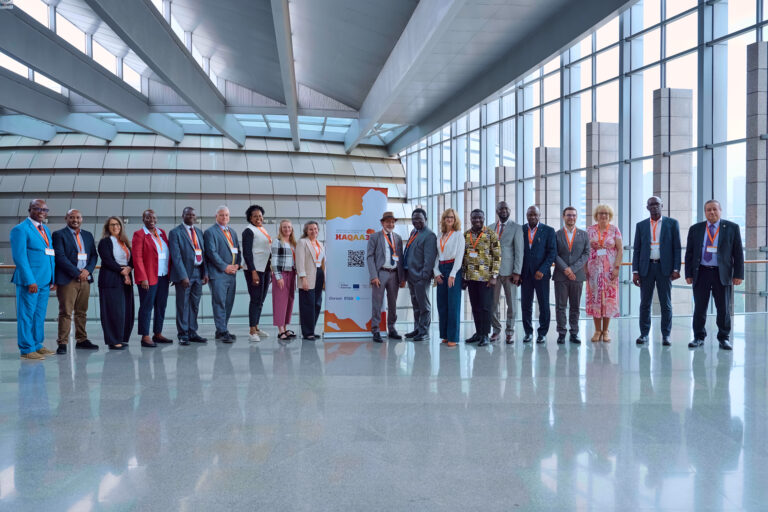
In parallel, four exclusive Leadership Forums brought together 123 Vice-Chancellors and Deputy Vice-Chancellors from participating universities. These forums provided high-level policy dialogue and peer learning with continental and regional stakeholders, focusing on quality management, strategic positioning and African integration objectives.
Evaluation surveys confirmed that the trainings met their objectives: in all cohorts, a large majority of participants considered the acquired knowledge relevant, the learning outcomes achieved, and the structure and topics well chosen, with strong networking opportunities across regions.
These results demonstrate HAQAA3’s growing impact in promoting the ASG-QA as a tool for building a shared QA culture and strengthening institutional leadership for a harmonised African higher education space.